Friday, February 28, 2014

5 Books Every Graduating Musician Needs To Read

Spring is always a stressful time of year for young musicians.

Everyone is anxiously waiting to hear from festivals, grad school, or if you're like I was, you have no interest in either of those things and have no idea what you're doing in 6 months.

I felt that music school had really failed me because I felt completely unqualified and unprepared to get a job involving music.

Looking back now, I realize it was totally my fault and that I had been depending on an overpriced piece of paper to prepare me for the world.

I definitely wasn't alone in thinking this and now recognize that my education is my responsibility and mine alone.

In the spirit of educating myself, I hit the books.  I have since become an avid reader and this habit has totally changed my career path.

Here are the 5 books that everyone leaving the nest of school should take time to read:

The Savvy Musician

If you're not a musician, you can skip this one.

If you are a musician, do yourself a huge favor and read this book.  It changed my life and set me on a course for success.

He hits on everything from marketing to managing your money.  It's an excellent intro to the topics that all artists need to be hip to.

There are a few books along the same lines that I read, but this was by far the best.

Thanks Dr. Threinen.

I Will Teach You To Be Rich


Like most college kids, I was unbelievably clueless about money.

This book totally changed that and got my finances automated and in tip top shape.

Don't let Ramit's snarky tone throw you off.  This guy is ridiculously smart and outlines a program to get your finances where they should be.

I've read a few books on finance and this is the only one I didn't want to use for toilet paper.

His blog is also a phenomenal.  If you're really into it, he has some business courses online that are amazing.

48 Laws of Power


This book is a masterpiece.

When I first looked at it, I was really naive and signed it off as a book for sociopaths.

Seriously, it can be pretty dark at points.

Since then, I've come to love Robert Greene's books and have read every single one of them a few times.

Everywhere you go, everyone you meet has some kind of alternative objective behind their actions.  This book will lay out everything you need to know to move through the world and defend yourself against the advances of others.

Read it and keep it handy.  I probably open this book once a week.

The Personal MBA


For those of you that are interesting in business (anyone who plans to freelance, teach, compose, etc.), this will take you on a whirlwind tour of everything you need to know.

From the most basic elements of revenue  through marketing, sales, and creating systems to run your business (and life) more efficiently.  It's just the meat of the matter and no buzzwords or fluff.

Save the $100,000 an MBA could run and just buy this book.  It's the most thorough business education you could ever receive for $10 on Amazon.

See his reading list of further recommendations.

So Good They Can't Ignore You
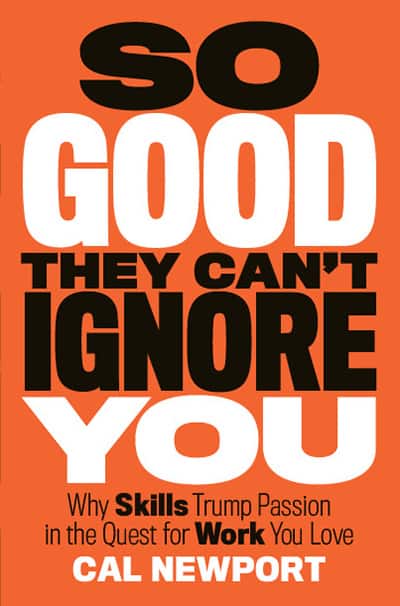

"Follow your passion" is terrible career advice.

No one will pay you just because you're passionate about something.

This book really made me pull my head out of my ass.

Cal Newport really lays it down with incredibly compelling career advice that goes against the standard approach many people take.  He breaks it up in to very actionable steps to get you moving in the right direction with your career.


Wednesday, January 22, 2014

9 Steps To Meeting Mentors That Just Might Change Your Life.

This time last year I worked in a parking garage.

For two years prior to that I worked in a different parking garage.

Riveting stuff.

These days though, I've got a pretty cool set up.  I do marketing for a local orchestra in town, I'm a Teaching Artist (TA) for Tune Up Philly, a sub TA for the Philadelphia Orchestra, and get to do lots of really awesome freelance stuff around town.  It's all very flexible and I'm very much in control of my own schedule.

Just about every single one of these new opportunities has come along with the help of a mentor.

Now, I by no means have an extravagant life, but I definitely am in much better shape financially, professionally, and emotionally than I was a year ago.  It's actually a really simple process that any student or someone looking to transition can follow to get results for themselves.  

Here are a few steps:

1.  Reach out before you need help.  

If you know you want a big life change to take place in the future, plan ahead.  Whether you're wanting to start a new job, graduating college, or moving to a new city, be aware that very rarely do things just work out immediately for anyone.  The people who succeed are the ones that have had a plan in place and followed it.  

In terms of mentors, this means planting the seeds of a potential new relationship long before you hope to get anything from them.  No one is going to just take some random-ass person under their wing without knowing a little something about them and how they work.

2.  Appeal to their own interests.

People won't do just anyone a favor.  When you're approaching someone, you should always try to interest them by having something to offer them.

Hint:  A simple way to stay on people's radar is to send them interesting articles/book recommendations that you think they might be interested in.  It's free to you and it's a good way to "ping" people without seeming like a bother.

3.  Create a ladder to climb higher.  

Everyone wants the brilliant thinkers of their industry to mentor them, but if you just start tweeting at them out of nowhere, you'll get nowhere fast.

Instead, start lower on the totem pole with mentors and work your way up from there.  People just a few years older than you can show you the ropes and might be able to help you break in to the next level of connections.  Find a way that you can add value to them and they'll probably be happy to share their wisdom they've learned (they also remember what's it's like!).  Before you know it you'll be introduced to many more people.

4.  Be ready to put in the time.  

Most people are lazy and don't want to put in the time to learn.  If you want to get the most out of these connections and really dig in to everything they've got to offer, spend as much time with and around them as possible.  I used to get up to go to assemblies/board meetings/staff meetings/anything to get to know the environment.  

If people see that you're serious about learning and willing to put in the time, they'll know that you're someone that can be depended on to work hard.  Trust is absolutely necessary.

5.  Return the favors by making them look good.

If you've done it right, you'll eventually find yourself caught up in world that you would've never thought accessible.  Mentors will open doors for you that you could never gain access to alone.  Whether it's access to their networks, a job, or a great reference, they'll have done you a lot of favors over time.

With this in mind, you should know that the best way to repay your mentors is to do a killer job and make sure you show them they're not wasting their time and energy on you.  Make them happy they invested in you and you'll continue reaping the benefits of a good relationship for a long time.

Fun fact:  The parking garage I used to work at was for a private club in town.  Less than 6 months after leaving that job, I'm now attending events there instead of working in the garage.  I'm not bragging, but I wanted to provide an example of how effective this stuff can be.

6.  Don't worry about the money.  

Find ways to make ends meet, but there are infinitely more important things to be gained with a good mentor.

7.  Be strategic with who you're reaching out to.  

Do some research in your space and learn who would be a good fit for you.  It'd be a major bummer to invest time in something that didn't yield the results you want.

8.  Manage your expectations of people.  

If you find yourself in the position of getting a really high profile person taking interest in you, understand that they're extremely busy and that you'll have to use what time you get with them wisely.

9.  Don't ask them to be your mentor. 

Would you go up to a hot girl/guy at a bar and ask them to be your boy/girlfriend?

Maybe you would...I hope not though.

You'd look like a total doof and get shut down immediately.  Let the relationship develop naturally without slapping a presumptuous label on something.

There are plenty of other things to be explored in this topic, but I think this is enough for now.  I wrote this post because it's something that has REALLY made a huge difference in my life and I hope it will help others do the same.  

If you've got any questions or thoughts post them in the comments below.

Wednesday, January 1, 2014

What we can all learn from 50 Cent, Jane Goodall, and best selling authors.

What do 50 Cent, Jane Goodall, and best selling authors like Ryan Holiday, Remit Sethi ,and Tim Ferriss all have in common?


Probably a lot more than we would think, but what I'm referring to is one of the things that sent all of them over the top in the careers and could do the same for us.  The thing I'm specifically referring to is their unique ability of getting to know their environments from the inside out to effectively achieve their goals, whether that's selling music, studying apes, or selling millions of books.

So what does that even mean?

What makes each of these totally different individuals wildly successful is that each of them has an uncanny understanding of the audience they're targeting.  We live in a culture that is always looking for the easy way of doing everything and because of this, most of us never actively develop the skills (or just are too lazy to) necessary to invest time, energy and other resources in to doing a totally amazing job in getting to know something.

Goodall lived in the jungle, 50 Cent created a website specifically to interact with his fans directly, and all the authors I mentioned are masters of understanding the desires of their audiences.  Every time you go make a pitch to your boss, write up a proposal for work, or even try just drum up some freelance work for yourself, if you take the time to really get to know your audience, you'll have infinitely better results.

Even if it means volunteering your time and resources, the return on truly knowing what they want and desire is worth more than you'd think.  Just think if you knew exactly what your potential client, your boss, or even your family and friends were thinking before even making your pitch for whatever it is.  Understand what motivates, intrigues, and moves people is infinitely applicable in everyday life.

I think we've all got a list of people a mile long we could communicate with better or things we could more thoroughly understand.

What's yours?

P.S.--- In case anyone is wondering where I got the title from, I have been reading The 50th Law by Robert Green and 50 Cent.  It's an excellent read on living life fearlessly.

Friday, November 22, 2013

Get more gigs in less time.

How many times have you been invited to like a page for your friend just to find that the page serves absolutely no purpose?
I'm not hating on FB pages.  I think they can be really awesome and do wonders for communicating to your audience (if you have one).  But for the most part, they're absolutely useless when it comes to generating work.

Things like Facebook, Twitter, websites, and other things like that have a lot of value, but they're not something that your joe-schmo student looking to freelance should be spending time on.  I have a FB page for my quintet and it serves absolutely no purpose other than acting as a place for my friends and family to see what's going on with the group.  

That's it.

I have never gotten a gig through that page (and probably never will), Twitter or even from the website.  

While they all have a purpose, the bulk of your time should be spent directly interacting with potential clients and other people that could potentially be paying you.

Think about what kind of work you're currently getting and then ask yourself these kinds questions:

-Where did those gigs come from?
-Could I be expanding my opportunities in this area?
-Are there other areas I could be aiming for?

For my quintet, we do a lot of work with churches.  So....I emailed every church I could find an email for about my group.  Then I realized that not only do these churches hire for their services, I should be doing concerts there too.  Once I started digging deeper and expanding on work I was already doing, it opened up a ton of new opportunities.  With a little time and a lot of emails, I started developing relationships with hundreds or people around the area that pretty regularly reach out to me inquiring about our services.

Same goes for my personal freelancing.  The majority of my work is schools.  So, I reached out to every conductor with a brief intro and a resume.  Nothing pushy, just planting a seed with them.  I was immediately hired to play.  Simple.

Do they always pan out?  No way.  But both of these things have directly led to making money playing horn.

It's all just something to keep in mind.  When starting off, it's best to get some quick wins to give that motivation to keep pushing.  Designing websites and spamming your FB friends probably won't lead to opportunities immediately, so try focusing your efforts on the things that will get the results you really want.


Wednesday, October 2, 2013

The best concert I have ever been to.

By the time I even get half way finished with this post it will be out of date, but I'm going to write it anyways.


I witnessed something incredible tonight.  The Philadelphia Orchestra was supposed to be performing in Carnegie Hall tonight.  Due to a stagehand strike, the show was cancelled and they decided to put together a last minute free concert to the public.  In less than 12hrs of marketing via the internet they PACKED Verizon Hall.

For those of you who don't know, Verizon Hall is huge.  I mean really huge.

There was some serious spreading of the word (marketing!) going on today.  Unfortunately the hash tag (#philorchpopup) is a little clunky so it's not even close to being a fair representation of how much buzz was going on today about this concert.  I would venture to say (quite confidently) that this was hands down the most buzz about a concert they've ever had.  This orchestra is over a hundred years old.  That's wild.

What caused it?

I can't say for sure, but I have a hunch it had a lot to do with the fact that the orchestra was providing tremendous value to their community tonight.  They could've just gone home after hearing the concert was off in NYC, but they didn't.  Instead they slapped together a concert filled with favorites that everyone would enjoy.  Their world class conductor, Yannick Nezet-Seguin was talking to the audience the entire performance.  They had a little girl conduct William Tell.  The audience had out their cellphones and were encouraged to film and share the concert with the world!  They did all of this in casual clothes.

Everyone was having a blast and it shows online.  There are hundreds of posts going on around Twitter and Facebook.  Musicians were even filming from the stage.  Some of the posts I've seen have hundreds of shares, likes, and retweets.  If the hash tag were a little better I think we could track it even closer!

Like most businesses, organizations tend to try and buy the attention of their audiences.  Tonight happened all because it was exciting, a phenomenal product, and it was all for the audience.  They probably didn't spend anymore than a little staff time today getting the word out.

The time has come for organizations to rethink how they connect and engage with their audiences and I hope tonight starts a dialogue in every arts marketing depart across the country about what they can be doing to better serve their communities.

Also, just an FYI, Carol Jantsch's video from the stage has gained like 50 Likes and the shares have over doubled since I wrote this.  Just think about how many people The Philadelphia Orchestra reached tonight.  It really is amazing.

Tuesday, August 20, 2013

4 Steps to Jump Start Your Freelancing Career.

Well, folks.  It's that time of year again.

Many of you might be starting a new year of school or even moving to a new city.  Whatever you're doing this Fall and beyond, I bet you've got high hopes for what you're going to achieve in this upcoming year.  I know I do!

I've been doing a lot of thinking lately about what has proved effective in helping me get my freelancing career moving and I decided to write a little bit about it.  As most of you know, we musicians (and many other careers) depend a lot on freelance work for extra income.  So I decided to give my spiel on what has worked for me thus far.  I'm a big believer that by defining and measuring what works, you can not only achieve success, but replicate it by applying those principles over and over again.  The following have worked wonders for me (and many of my most successful friends) and I hope that you'll give them a try a let me know how they work for you.

1.  Acknowledge that it takes effort.----I know a ton of people that sit around moaning and groaning about how they never get gigs.  Some people seem to think that it will just magically happen someday.  Wrong!

This may seem super obvious, but it is amazing how many people will never take the time to put in the work it requires to really get yourself out there.  It takes some time and energy, but it's all a matter of making it a priority.  We've all got the same amount of time, it's just a matter of how we decide to use it.

2.  Reach out to others for guidance.----The only way to ever get hired for anything is for people to know that you exist.  You can spend hours everyday in a practice room perfecting some random 8 bars of some random symphony, but if nobody knows you're around, you'll never get called for anything.  Anywhere you go, there is someone who was in your same position at some point.  Reaching out those people for advice can go a long way.  Nobody starts out on the the top of the freelance scene, but everyone has experiences they can share that will shed some light on what might help you along.

I am still very close with some of the people that took time to sit and talk with me several years ago.  One of them has passed along countless gigs to me, I currently work for two of them, and another one hooked me up with my current teaching position.  Once you've started making these connections, you'll be in the perfect position to put the next step in to action.

3.  Create opportunities to hire other people.----Being in a position to hire other people is a very powerful networking tool.  Find the people that you want to work with that can and will return the favor.  Before you know it you'll have a nice little circle of people that are totally willing to help each other out as much as possible.  A huge chunk of my freelance work comes from my friends that referred me to a contractor or conductor.  The more opportunities you have to help others, the more opportunities you'll be presented with.

From my own experience, starting your own group is the most effective way to kick start this process.  If you're constantly generating opportunities to hire others on your own, that means that you always have the ability to expand your network.  This can take a lot of effort on your end, but again it's all about prioritizing what's actually important enough to you that you'll make the investment to get started.

4.  Be a good colleague.----All of these steps are useless if nobody wants to work with you.  Make sure you've got your shit together when you venture out in to the world of freelancing.  No one wants to work with someone that has a reputation of being difficult to work with, unprepared, or irresponsible.  In my opinion, the best people to work with are the ones I'm friends with.  Most people would rather hire someone that is totally awesome to work with over someone that is an amazing player, but a pain to deal with.  Again, this may seem like common sense, but I can think of a lot of people that I will never call just because I don't enjoy working with them.  It's nothing personal, but we all want to spend time around people that we enjoy being around.  I think we can all agree on that.

In closing, I think it's worth saying that the freelancing biz is very much a relationship business.  People want to work with people that they enjoy being around and that add value to their lives professionally and personally.  Like anything worth doing, developing a freelance career is a lot of work, but extremely rewarding.  I hope that all of you that have been looking to break in to your local freelance scene will take this formula and really give it a whirl.  From talking with a lot of my friends that are infinitely more successful than I am, I've found that these steps are universally used in everyone's career.

Take some time and really think about if you're where you'd like to be in the freelancing part of your career.  What could you be doing better and what can you change to improve?

Take a moment to leave me a message or make a comment.  I'd love to hear your thoughts.

Sunday, August 11, 2013

3 Reasons Why Everyone Should Learn to Sell (and what they mean to you).

I don't know about you, but I often find myself getting really frustrated when I know I have ideas that can  ake a change for the better for something/someone, and I just can't seem to successfully project my thoughts and ideas in way that makes anyone care.  This seems to happen to me in all aspect of my life from my social relationships, professional settings, and in my own projects that I'm working on.  I recently ran across a book that has totally changed my entire perspective and approach to moving others.

In Dan Pink's book, To Sell is Human, he argues that the ability to sell is universally necessary.  The idea that sales is sleazy and only belongs on the used Subaru lot is totally ridiculous when you really think about it.  According to Pink, selling is about more than getting someone to buy something, but more importantly it's about moving others.  This point about moving others is where I really got hooked and my mind starting running wild with ideas.  The whole time, I was thinking of ways that I could others excited about this concept and how potentially useful it is to anyone and everyone.

Here's some of the three big points I took away from the book:  

1.  Learning to sell, means learning to articulate the value of what you have to offer in a compelling way.

When you try to sell someone on an idea of yours, it's absolutely critical that you can clearly articulate the value of what your proposing and why they should care.  This may sound easy, but when you sit down and really try to define why exactly someone should care about your idea, it gets tough.  It's really telling when you speak with someone and ask them to explain why anyone should care about their idea and they can't tell you.  Try it sometime.  You'll be amazed at how often people draw a blank.  I mean, seriously if you don't believe me just look at most orchestra's mission statements.

2.  Learning to sell, means learning to effectively communicate.

Whether you're trying to sell someone over the phone, through a Facebook page, or through any other form of communication.  Selling is all about being to communicate your ideas to anyone through a variety of outlets.  I don't know anyone who couldn't stand to improve some aspect of their communication skills with others.  Getting out there and trying to articulate the value of your ideas in any medium is a great way to learn communication.  You'll learn tons about how to adapt your communication to make it effective with anyone. 

Who couldn't benefit from that?

3.  Learning to sell, means learning to help your ideas spread and influence others.

This is the big one.  We all have ideas that we want to spread and learning to sell will help anyone be more effective in their quest to make some kind of difference.  Whether you want to help your kid become more motivated to fill out their college applications, start a business, or win anyone to your way of thinking, investigating sales will help you accomplish that.  

Being able to sell doesn't just mean getting people to buy things with money, it means getting people to part with resources in exchange for something that will add value to their life.  These resources could be anything from time, attention, money, or virtually anything else.  Coordinating these various resources to help you accomplish your goals is what selling your ideas is all about.

Think about it.  Everyone has a friend or family member they'd like to influence in some way or maybe some big idea they'd like to implement at their job.  It's all a matter of coordinating the resources necessary to make it happen.  Whether you're a freelance horn player (like myself), a parent, teacher, or anyone looking have some kind of influence (which is everyone), the skills involved in sales will make you more effective.  

If you're interested in doing some research, I would highly recommend Dan Pink's book To Sell is Human.  It's probably the most "un-sales-y" book on sales you could possible find.  It's an extremely engaging read that is filled the brim with fascinating psychology to learn about.


The image up top is by artist Hugh Macleod, a favorite cartoonist/author/marketer of mine that totally gets it.

-Seth

Sunday, June 16, 2013

Doing stuff for free.

Well, it's been a few weeks since I've written, but it has certainly been very eventful month!  This past weekend my quintet had the great opportunity to perform in Verizon Hall at the Kimmel Center here in Philly.  We got to play for about half an hour on stage with (I think) the largest concert hall organ in the country.  Yes, it was totally bad ass, and no, we did not get paid.

Doing gigs for free is something that I've noticed can be a tender subject for a lot musicians (especially young musicians).  Personally, I have no beefs with doing things for free and I think people need to be a little more open to things before making judgments because it's "free".  Obviously you don't want to waste your time on a crappy gig that doesn't have anything to offer you, but I can think of a lot of examples in my own short freelancing career where a volunteered gig has led me to paying work.

Here are a few factors I take in to consideration when asked to volunteer my services:

  • Who is contracting?  
    • People understand that doing free gigs isn't always ideal and I think most people will look at it as a favor.  Having people owe you a "favor" is a good thing if it could lead to paid work in the future.
  • Who will I meet there?
    • Whether it's the conductor, other musicians, or someone totally different, it never hurts to get out and meet people.  Even if it's free, show up prepared and play well.  You'd hate to sit next to someone that could help you out and make a bad impression because you're playing poorly. 
  • Do I have anything else going on?
    • I have a confession to make that most other freelancers can relate to.  If I only played when I was getting paid to do so, I wouldn't be playing very much.  Sound familiar?  If it doesn't cost me more than a few bucks to travel and I'm not missing anything important, I'll always consider doing things.
I know some people (a lot more than you would think) that only want to show up and play when they're getting paid.  That's fine and dandy, but I think people are a little delusional about starting out careers in music.  I'll say it again, if I only played when I was getting paid, I would not playing much at all.  That would be totally lame.

Obviously every situation is unique, but I really think people should open up a little more to the idea of volunteering their talents.  For example, if you're a wanting to start a group that does wedding ceremonies, you'll find that it is incredibly tough to cut through the mobs of ensembles doing the same thing.  Would it be worth the time to volunteer your group to play at a local wedding showcase?  

Absolutely.  If it means an opportunity to prove yourself and legitimize your abilities to someone who could potentially pay you, then it is absolutely worth doing.  Keep an open mind with this and always be on the lookout for the next opportunity.

I'll leave you with a quote from my friend, mentor, and former teacher Jeff Lang that I think is an important thing to keep in mind:

"It's not about being in the right place at the right, but being some place all the time."

Sunday, May 26, 2013

3 Biggest Lessons Learned This Year

In the past few weeks, Philly has been abuzz with countless graduation ceremonies and other festivities that have caused me to sit and reflect on what I have learned since I have officially been in the "real world" for over a year.  I hope this list helps some of you who are facing the unknown of what's next in your life.  I've got a lot to learn, but these are just a few things have really made a huge difference in my life that I wanted to share with you all:

1.  Asks LOTS of questions.

If there is one thing that has directly benefited me more than anything else this past year, it has been my fearlessness in asking lots of questions.  No question is too dumb to ask.  In this day and age, you can get in touch with virtually anyone if you know where to look.  Find people that inspire you and reach out them for guidance.  I do this ALL THE TIME, and it has led me to some really great relationships with people I would've never dreamed of meeting.  In the last year alone, I have met business executives, world famous conductors, non-profit CEOs, legendary performers, and so many more interesting people that have offered me some kind of advice or guidance.  I have actually stayed in touch with many of these people and now consider them to be mentors that I can reach out to for guidance.  Not only can these mentors offer guidance to me, but they also act as a connection for me to reach out to infinitely more people that would have never been in my circles otherwise.  Emerson said it best here:

“In my walks, every man I meet is my superior in some way, and in that I learn from him.”

Truer words have never been spoken about learning from others.  Don't be afraid to ask for help.

My recommendations for learning how to connect are:  Never Eat Alone, by Keith Ferrazzi, and How to Win Friends and Influence People, by Dale Carnegie.

2.  Put yourself out there.

It is can be extremely difficult to take risks.  If you never audition, apply, or try anything, you'll never get turned down.  However, unless you're actively putting yourself out there, you will never actually be doing anything.  If I hadn't been actively trying to create my own opportunities this year, it would've been a very sad year of horn playing for me.  Constantly putting myself out there and always looking for the next opportunity to learn has really served me well.  

Seth Godin refers to this as "shipping", and I think it's something that everyone should get used to doing.  I generated well over half of my performing income this year from things that I created myself.  It only takes a little bit of legwork to get started and I can promise from my own experiences that it's incredibly rewarding work.  Getting in the habit of being proactive (and staying proactive!) is one of the key distinctions between people that people that make waves and the others that just bob in the pool.

3.  Pursue other interests.

Not only does this keep me sane, but I have actually learned more about how to create a career as a musician from reading books on totally different topics than in four years of music school.  (It's cheaper too.)  For me, reading has been a great outlet and has introduced me some people and ideas that have changed my entire perspective on careers and life.  Find what excites you and invest yourself in it.  Like I said, the most obvious benefit is that it keeps you sane, but it also develops entire new skills that you can bring to your career as a creative.  Having something unique to offer is so important in the crowded world we live in.  

Personally, the interest I pursued this year was business and entrepreneurship.  I can't even begin to describe the benefits my freelancing career alone has seen from me looking at the music business from a totally different perspective.  Not only has it helped me be more effective in my efforts, but it has even helped give me clarity as to what direction my professional life is headed.  Perhaps it can do the same for you too.


Anyways, so that's my top three list for the year.  I could blabber for days about this stuff, but I will spare you all from that.  I would love to hear your thoughts on all of this and even what you hope to accomplish in the coming year.  

Peace out, folks.


Wednesday, May 15, 2013

Quick wins.

This past weekend my group, New City Brass, had our first official concert performance.  For those of you that are interested, you can check out samples from the performance HERE.  Now that we've got our first recital under our belts, I can say with confidence that it feels like a "legit" group!  Following this performance, I just had a few thoughts that I think are worth sharing with those of you out there interested in getting your own stuff started.

First off, I think the most important thing anyone should do when starting something from scratch is focusing on getting your first win.

What do I mean by "win"?

Well talking to people I meet, everyone always seems to have a list of things they are "eventually" going to do.  Very few people ever get around to actually trying these things, but the few that do often give up within a few weeks because what they envisioned is actually way harder to achieve than they originally thought.  The best way to combat this feeling of defeat is focus specifically on getting your first opportunity to do what you set out to do.

For me, I was trying to get a brass quintet hired to do weddings and other ceremonial music gigs.  It's actually funny, because I have yet to actually get the group hired for a wedding.  However, the minute that first response came from a church offering to hire us for Easter, I knew this could work.  Immediately following that email, I got that extra boost of motivation I needed to keep pressing on.  About 700 emails later, I have gotten more offers for Christmas and Easter than I could have ever possibly imagined six months ago.  In addition to that first Easter gig, I managed to get us a handful of other opportunities along the way, which have continued to open more doors for myself and the rest of the group.

The point I'm trying to make is that it's a huge ego booster to get that first opportunity.  You shouldn't be shooting for the top of the world starting out.  If you do, you're going to be totally bummed when you don't get any opportunities.  Even if it means doing things for cheaper than you want, it's worth it to start building legitimacy for yourself.  Delivering a high quality product will help you start building a pool of references that could help lead to other opportunities.

Yesterday alone, I sent out over a hundred emails to concert presenters all over PA and NJ.  I only got 2 responses so far, but one of them was an offer to do a Christmas concert at a church in December.  Will it be the most amazing gig ever?  Probably not.  However, just getting that opportunity and connection is a huge win for the group.

Peter Seymour said it best in the interview I did with him:

"The first gigs were all very random and spread out, but very important.  I have always believed the perception of something happening is something happening.  If you’ve got a CD, shows, a website….you’ve got an ensemble!  Once you’re doing gigs and getting out there, it leads to more gigs and more opportunities."


Thursday, May 9, 2013

Dealing with haters.

First off, I want to say that while I have my own opinions on dealing with the haters of the world, Julien Smith laid it down better than anyone HERE.  For those of you that are uncomfortable with "profanity", I would not recommend you read what he has to say.  Everyone else, go read it!

As I've mentioned a few times in the past few posts, I think one of the biggest things that holding most people back is fear.  There are oodles of things to be afraid of out there, and trust me, I have my fair share of things I fear.  To be quite honest, one of the biggest fears and obstacles I have dealt with while getting my group a little bit more legitimized, is worrying what other people will think about it.  

I have been working really hard on getting this group running this year, and it wasn't until like a week ago that I finally made a Facebook page for us.  Mind you, there was very little reason until recently to have a page on Facebook, but I seriously told myself I would make this page at least ten times since January.  I realized recently that what I was most afraid of was what the hundreds of music friends I have would think about what I was doing.

How dumb is that?

I was sitting here worrying about what they'll think about my website, what the group sounds like, who's playing in it, where we are playing, and all kinds of other stupid stuff.  Seriously, this is what was holding me back from making something as petty as a Facebook page that most people will never even pay attention to. I know for a fact that I have "friends" and colleagues that will look at the website I made for my group and judge it.  But it took me a little bit to realize that the people that are the most judgmental are often the ones that have the least going on.  Honestly, I don't care at all what those people think.

The website I created was to give people a place where they could learn about and hear the group play.  I'm not trying to impressive my friends that have graduate degrees in music performance.  My audience is people that are genuinely interested in learning more about the group.  It's just place for me to host information, not somewhere to impress people that will never hire us for anything.

It such a silly thing, but I think worth mentioning that people will always have something to say and everyone is always judging someone about something.  There is no reason I should give a shit about what other musicians think because they're not my audience.  So anyways, that is what's holding me back, what about you?  

Tuesday, April 23, 2013

Taking action.

Something I have been really noticing a lot lately is how few people actually take action and follow through when it comes to creating their own opportunities.  One of the most common excuses people have is that they "don't have time...."

Personally, I think that's a load of crap.

This is especially bad when it comes to students (but it applies to everyone!).  Now I know I'll probably offend some people by saying this, but students (again, not just students) are notoriously bad for mismanaging their time.  I understand the workload that goes in to being a student.  After all, it wasn't too long ago that I was a student and totally guilty of this myself.

When people say pull the "I don't have time" card (boo-hoo), what they're really saying is "I don't use my time wisely" or either "I choose not to make time because this isn't important enough to me."  There are very few people that actually would admit the latter.  Tons of people talk about wanting to get more gigs, but very few honestly put forth the effort of actually doing something about.

So for those of you interested in ever making money as a musician, which is it?

A true lack of time (don't care enough to make time) or are you just not using it wisely?

It's an important distinction to make.

One last thing that I think a lot of people have trouble with when it comes to actually comes to taking action is fear.  Now, I am by no means psychologist, but I do know from personal experience that one of the biggest things for me to overcome was my fear of putting myself out there.  It took me months to start this blog, and it took me over a year to legitimately start a group.  I still have trouble with it almost every time I go to make a new post that I know will probably (definitely) be criticized by some of my colleagues.  I can't tell you how many emails of mine have probably been deleted and just blatantly ignored when I'm trying to drum up some work for my group.

But when it comes down to it, these fears of rejection and failure are really pretty silly.  I have to say that I made it way more difficult for myself than it actually was and I have a good hunch that it's pretty universal.  Imagining the worst-case scenario makes these fears seem pretty petty.  The worst that could possibly happen is not all that bad.  There are millions of people that won't be able to eat or drink fresh water today in the world, and yet I'm sitting in my bedroom worrying that people won't want hire my brass quintet.  I think we could all agree that being rejected and failing are not actually a big deal.

I've been harping on this for weeks now, but I really hope that some of folks out there start taking action and acting on your ideas.  It's really a been a tremendous learning process for me and I know that it has offered valuable lessons to everyone else I know that regularly puts themselves out there.  Don't keep putting it off until "eventually".  That's bullshit and you know it.  There are people that go their entire lives putting things off and their whole lives go by and they never took a risk.

It's not that bad, I promise.

What's holding you back from something you want to do?

Friday, April 12, 2013

What works and what doesn't. Find a niche.

Hi everyone, it's been a few weeks since my last post.  I hope some of you are finding the recent information/resources useful!  Feel free to contact me anytime with feedback or if you'd like advice on anything.  My email:  hanes81@gmail. (don't abuse it, please!)

Anyways, I've been thinking a lot lately about how I can approve my approach to the ever daunting task of becoming a "professional musician".  I tried the "appeal to everyone all the time" approach with my brass group and I can say with 100% confidence that is does not work.  I seriously sent about 500 emails out to churches and wedding planners alone.  The original intention was to drum up some wedding gigs for me and my friends to generate some cash.  Care to guess how many of those we've gotten?

Zero.  I have literally no wedding gigs in the books for my group.

Now, before I throw a pity party for myself, I will point out that we have actually managed to get a handful of other gigs that have been great.  I have recently been reading a lot about strategy and how to successfully identify what works and what doesn't.  With this in mind, I encourage those of you trying to figure out what your next move is to explore the marketplace and find a niche you can fill.  Really invest some time poking around the internet learning about what others are doing.  In the process of this, you will slowly but surely start to realize what ISN'T being done.  Once you can start finding these gaps in the marketplace, you can really start getting an idea of what you can do to fill in the blanks.

I understand that this will be very difficult most of us creative folks.  I've said this many times before but it's worth repeating:  Take advantage of the lack of action in others!  There are opportunities out there just waiting to be created.  If I had to guess, I would say that most of the people reading this will do absolutely nothing that I encourage my readers to do.  This totally fine, but I really hope that some of you really do get crackin' with this stuff.

Again, please let me know if there is anything I can do to help any of you.  I'm really interested in this stuff and get really excited when I have to opportunity to help others start this process.

One thing I wanted to share this time is an interview about business stuff for creatives with Ramit Sethi and Chase Jarvis.  It's about an hour and a half, but well worth the time.  While you're there, take a look at other episodes on Chase Jarvis Live.  They're all really great!

http://www.youtube.com/embed/KJeoyckQn3A


Wednesday, March 27, 2013

Creating a group online.

One of the first things people claim to be stopping them from starting their own freelancing career is that they don't have a group.

Fair enough.

From my experience, the most difficult thing about getting a group going is finding people that you want to work with that will make the initial investment of time to get the group started.  Classical musicians in particular tend to be extremely defensive of their time and would rather spend it playing 6 bars of Beethoven by themselves in a practice room all day.  Most people I know don't want to show up to rehearse something unless they're getting paid to do it that weekend and I know from experience that the best way around this is to make the group exist on paper when starting out.

If you're willing to do all of the legwork yourself, you can get a group going with just an hour of time from everyone else.  Let's say you've got a wind quintet and you are looking to play some graduation ceremonies. All you really need from other people is an hour of their time to sit down and read some music down and record it.  Assuming that you're bringing in solid players that can just sit and play, you'll have more than enough quality audio to get your group started.

Once you've got a recording, no one else has to do anything if they don't want to until you get a gig.  Here are the steps you'll need to take and some free resources to help you do it.

Make an audio sample.

There are tons of programs out there for this.  Personally, I use Audacity because it's free and really easy to use.  Realistically, most people aren't going to listen very long (if at all) so make it short and sweet.  Attach it to all of the emails you send to potential clients to make it easier for them.

Set up a website.

There are countless places on the web that you can create webpages for free.  Here are few that I've used or know that other have used and had positive experiences with:

Weebly---I found this to be by far the easiest to use.  Very simple, clean, and easy design.

Wix---Wix is a much more involved website design platform.  It has a lot more bells and whistles in the free version than Weebly, but this also makes it a bit more to manage for a first time user.  Still a great website though.

Wordpress.com (.org is different, so be aware of that)---I know many people that host their blogs through Wordpress and have had great experiences with it.  I had difficulty figuring out .org, but .com is apparently easier.

All of these basic website designers come with more than enough gadgets for what you'll need to get started. Realistically you will only need a place on the page to talk about the group and what you do, a page where your sound sample is available, and a contact form.  These are all standard features and they're all you really need to get started.

I know what you're thinking, that sounds like an incredibly boring website.  But I'm a firm believer that simple is better.  This is especially true when starting out.

However, I know that it's nice to have some photos, visitors, domains, and all that fancy stuff, so here are a few more links you may interested in to make your page better:

istockphoto.com---Here you will find thousands of images that are free to use.  There a some really great pictures here of EVERYTHING so this is a good place to start when filling space on a webpage.

gettyimages.com---This site has some free images, but most are for purchase.

soundcloud.com---Host your audio files here if you like.

domainsinseconds.com---Buy your own domain name here!  Or at Godaddy.com  There are tons of places to do this.  It just adds legitimacy to your site.  (Free sites will usually have the host in the name)

http://tools.seobook.com/---If you want people to actually find your site when they're looking for the services you offer, check out this website.  Search Engine Optimization (SEO) is important so that your page pops up on Google and other search engines.  Here is help from Google themselves:  google.com/websiteoptimizer

If down the road you want to get a logo for your group/organization, the following resources are all fantastic crowd sourcing sites that allow you to put up a description of what you want and have thousands of freelancers all over the world have a chance to design it for you.  You just name the price, what you're looking for, and time limit, and the designs will pour in.  This also works for merchandise, websites, brochures, and just about anything else!
99designs.com
designcrowd.com
http://www.crowdspring.com/

This will take an afternoon to set up, but once you get it up and running your group will officially look as legitimate and professional as any other group out there!